Rural communities becoming 'digitally disadvantaged'
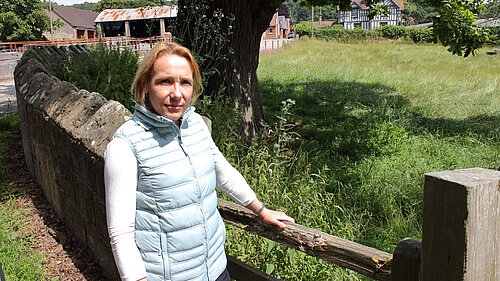
The impact of poor digital connectivity in rural communities has been revealed in a new report, spearheaded by Helen Morgan.
The report has been produced by a cross-party group of MPs tasked with evaluating mobile phone and broadband provision and infrastructure, chaired by Helen.
The Digital Communities All-Party Parliamentary Group (APPG) report warns that an ongoing lack of good coverage in parts of the country is undermining national ambitions for economic renewal, social inclusion, and technological leadership.
Helen said people in rural areas were becoming increasingly “digitally disadvantaged” as she highlighted the frustration of residents and businesses who struggle with poor coverage in the constituency.
Leading its launch, Helen said the report reinforced the real-life impact of unreliable mobile service and shared stories of constituents waiting for vital GP calls, struggling during power cuts, and paying extra for multiple network contracts just to get their phones to work.
In its recommendations, the APPG calls on the Government to commission an ‘urgent, independent review’ of the UK’s digital connectivity, alongside stronger regulatory scrutiny by regulator Ofcom, more strategic investment in connectivity to drive economic growth, and action to foster competition and innovation.
Helen said: “Digital connectivity is the backbone of modern Britain. It’s an essential lifeline for communities and businesses and should be considered a critical part of national infrastructure.
“Yet people in North Shropshire, which suffers with persistently poor broadband or mobile coverage, are left at a digital, social and economic disadvantage and risk losing out on opportunities for skills development, employment, and community engagement.
“Stories of being forced to sit in the loft or standing still in the one spot with signal in the garden, regardless of the weather, would be verging on comical if they weren’t so serious.
“Because when you’re waiting for your GP to call, or for your disabled daughter to tell you they’ve made it to work, or you’re in your 90s and you’ve been left without power or heating – the situation isn’t funny at all.”
The report shines a spotlight on the scale of the problem, highlighting that fast fibre connectivity reaches 87 per cent of premises nationwide, but only 62 per cent in rural areas.
Closing this digital divide could add £19 billion in annual tax receipts to the economy, the report claims and that for every £1 invested in digital inclusion £9.48 is returned to the economy.
Helen said that a key issue was the inaccuracy of the coverage maps referred to by the regulator Ofcom, which she said “significantly underestimate” the scale of the problem.
Independent research by the River Severn Partnership revealed that more than 15% of rural postcodes lacked good voice call capability, compared to Ofcom’s claim of just 1.45%, which led to the MP warning that the flawed data could undermine investment decisions.
The report also highlights the lack of mast-sharing agreements between operators, with Helen reiterating her call for legislation to enforce network sharing and roaming.
Concerns over the digital switchover are also highlighted, where mobile phones were now expected to serve as a backup during power cuts. Helen cited cases where residents were left without any means of communication for days during outages.
She added that businesses and farmers in North Shropshire had raised concerns, describing lost productivity, payment delays, and operational challenges caused by poor connectivity.
With the UK ranking 30th out of 39 developed nations for 5G performance, Helen called for urgent action to close the digital divide.
She added: “Without reliable access to high-speed services, the UK cannot achieve its economic ambitions or deliver inclusive growth, and the digital disadvantage worsens in North Shropshire.
“An urgent, independent review of the nation’s digital landscape is essential to restore trust, ensure transparency, and unlock the full potential of our economy.”
A link to the full report – Reconnecting Britain: Restoring Trust, Connecting Communities and Driving Inclusive Growth is available here.
Helen was due to lead a debate on rural connectivity in rural areas on Monday 5th January, but this was postponed due to urgent Parliament business.