Helen tackles Government on steel ‘manufacturing tax’
North Shropshire MP, Helen Morgan, has urged ministers to address the challenges facing local steel manufacturers after hearing concerns from businesses being hit by import tariffs.
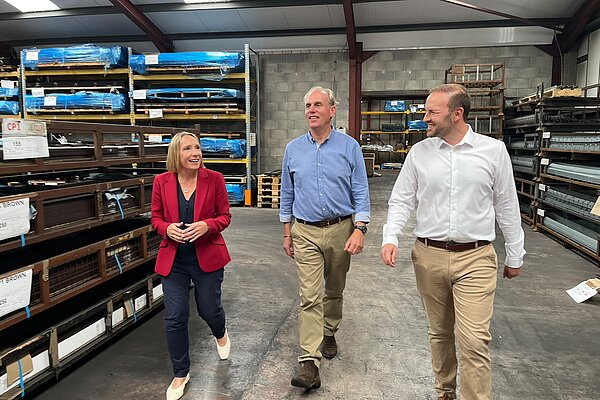
Helen raised the issue in Parliament and highlighted feedback from meetings with Market Drayton firms Everedge and Fowler & Gilbert Ltd.
The intervention comes after the Government introduced new rules on steel imports in July, reducing the amount of steel that can be brought into the UK without paying extra charges. Ministers say the changes are needed to protect Britain’s steel industry from unfair competition overseas.
But manufacturers say some of the specialist steel they need is not made in the UK and businesses have warned that the new rules increase costs when they have no choice but to source those materials from abroad.
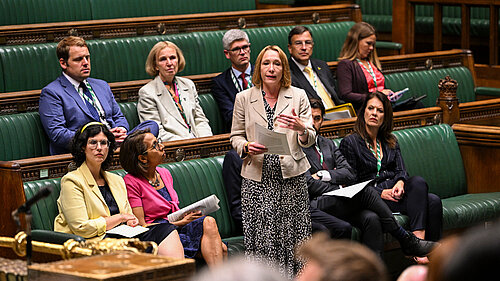
Speaking in Parliament, Helen challenged Business Secretary, Jonathan Reynolds, and highlighted how local manufacturers were being affected by the current restrictions.
Helen Morgan, MP for North Shropshire, said: “Fowler & Gilbert Ltd. and Everedge in my constituency both manufacture steel products and have been impacted by quotas and tariffs on steel imports, particularly on materials that aren’t produced in the UK, because that’s essentially adding a manufacturing tax to the work that they do.
“Their raw material cost is rising, there aren’t any equivalent restrictions on imported finished products, particularly low quality and low-cost imports from China, so they’re in a situation where it’s cheaper to import from overseas than to manufacture in the UK.”
The MP asked to meet with the Secretary of State to discuss “the concerns of those businesses to find a solution that works for the whole steel sector”.
The comments follow a visit by Helen to the two Market Drayton firms, where she met company representatives to discuss the challenges facing manufacturers operating in the current trading environment.
Responding in Parliament, Jonathan Reynolds MP acknowledged the concerns raised and agreed to meet, claiming that there could sometimes be “misalignment between certain product codes” and how trade ‘defence measures’ were applied.
It was argued that these measures were necessary to provide a level playing field for UK steel producers in response to global overproduction. Ministers have also highlighted concerns about the impact on domestic industries of heavily subsidised overseas steel production.